
Kitchen Garden Plant Supports: Keeping Your Vegetables Upright All Season
By midsummer, a productive vegetable garden starts pushing back against gravity. I learned this the hard way with the flimsy 2-3 foot tomato cages sold at most big box garden stores — they look reasonable enough on the shelf, but they just don't work for most tomato plants you actually bring home. By mid-summer, sometimes earlier, my tomatoes were toppling right over the top of them, like there was almost no support there at all.
Why Indeterminate Tomatoes Need More Than a Cage
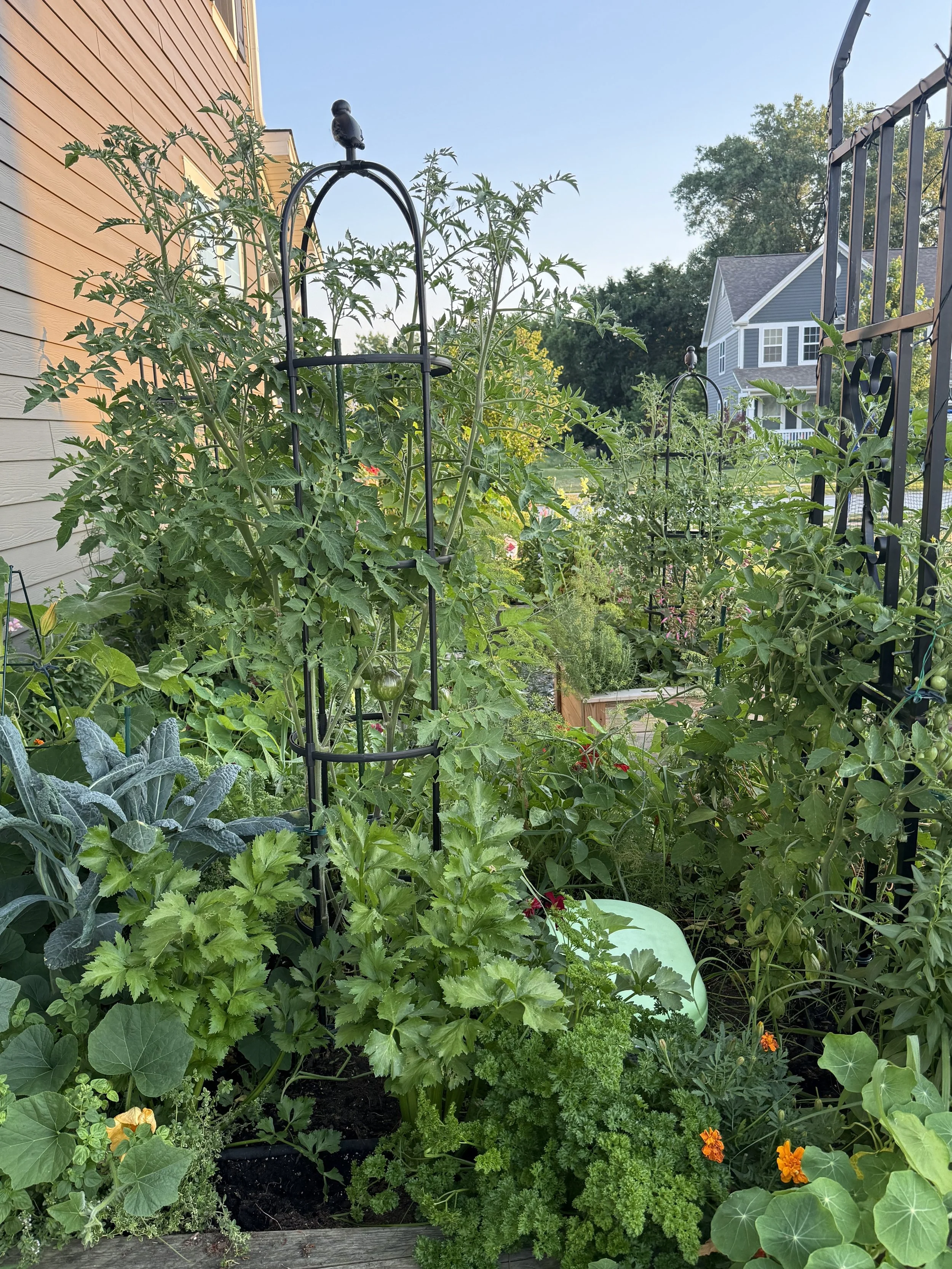
Most of the tomato varieties people actually want to grow — Cherokee Purple, Brandywine, Roma, Sungold, Better Boy, and plenty of others — are indeterminate, meaning they don't stop growing at a set height. They'll keep growing until frost finally kills them back, which sounds great until you realize a plant like that needs something tall and sturdy to lean on, not a short wire cone. I anchor mine to something actually built for the job: a 6-foot trellis, or even one side of an arbor.
My Method for Staking Tomatoes
Here's what works for me: I set a 6-foot trellis at planting time, push a 4-foot stake into the center, and plant the tomato right next to it. As it grows, gripper clips hold the main stem to the stake and later attach sprawling branches to the trellis sides — combined with routine pruning, that's usually enough to keep it upright all season.
And if yours has already toppled over, don't stress — it happens to every gardener, and it's never too late to prop things back up.
Pole Beans and Arbors
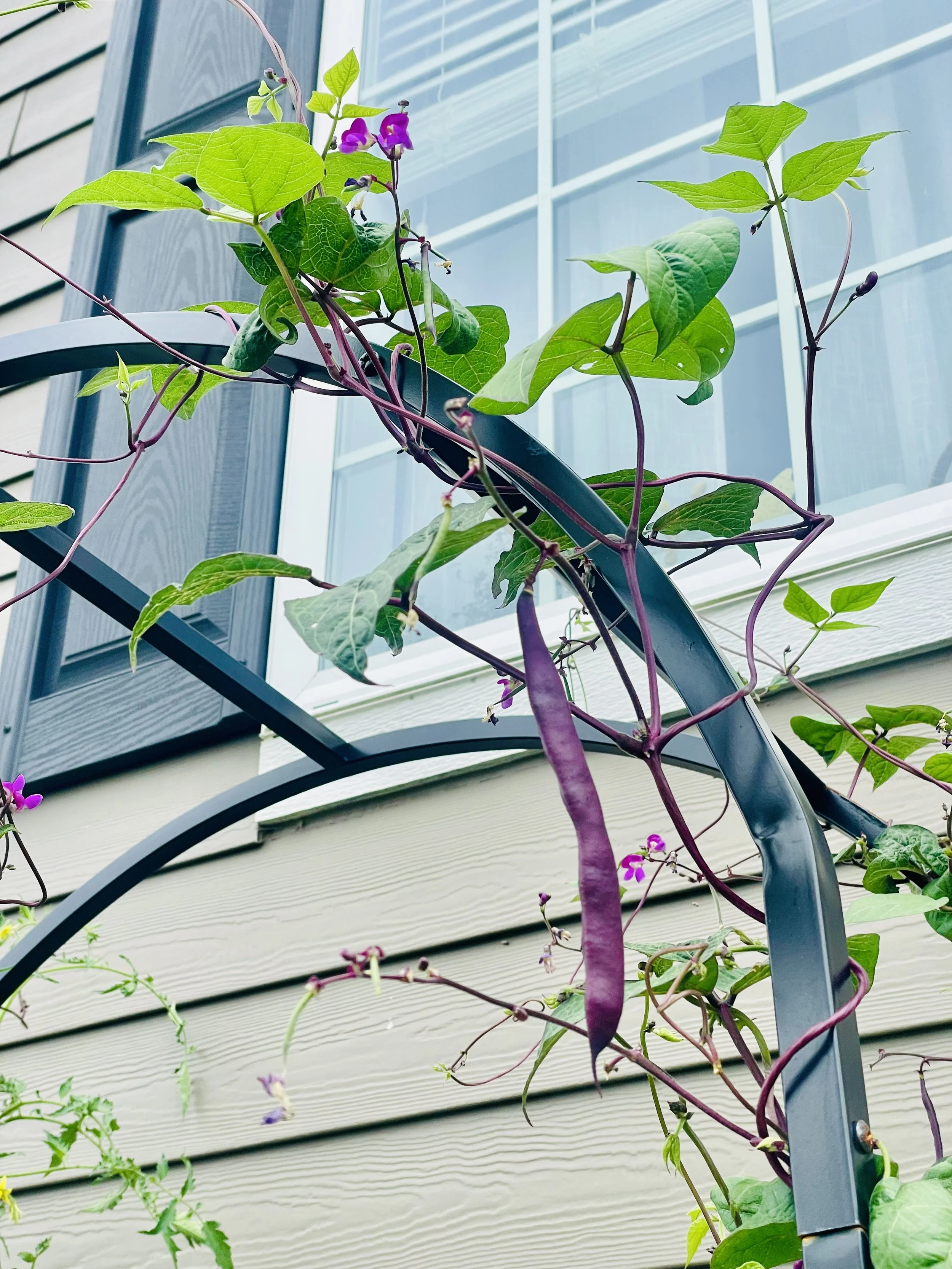
In my opinion, pole beans are best grown right next to an arbor trellis. There's something a little magical about seeing green beans hanging down from the very top of the arbor, and lifting my kids up to pick the ones they can't reach on their own. You can also grow pole beans on a 6-foot trellis instead — they'll eventually grow well past the top and start reaching for anything else nearby, but I don't mind how wild they get.
Cucumbers and Squash
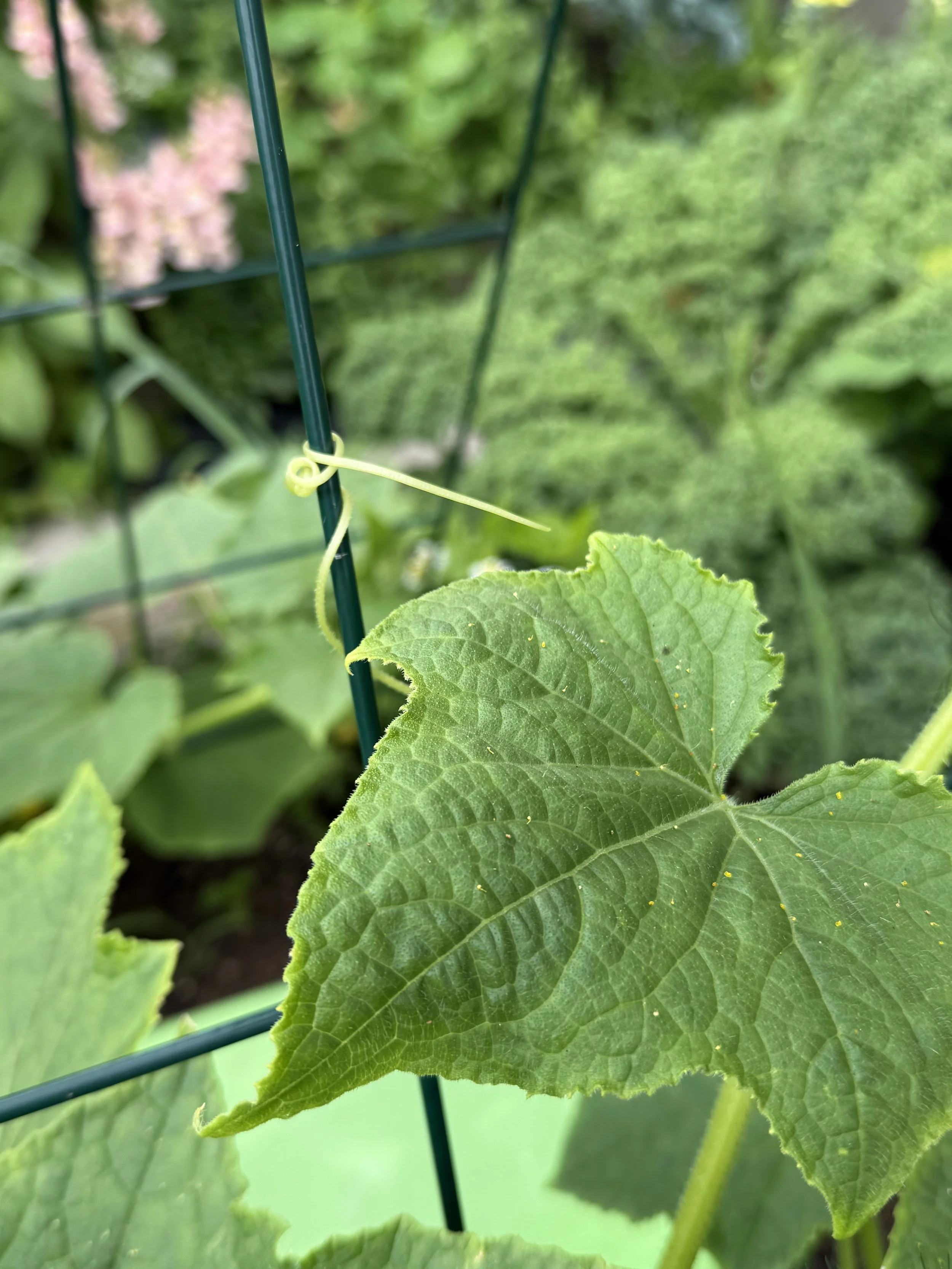
I put cucumbers and squash on an A-frame trellis or let them climb an arbor. As their tendrils reach out looking for something to grab onto, you can simply wrap them around the nearest rung to help them along.
Everything Else In Between
Not every plant needs a full climbing structure. For plants that just need a gentler assist, metal hoops and gripper clips step in to keep top-heavy stems from snapping under the weight of their own fruit — a tomato that's not quite trellis-worthy yet, or a pepper plant that just needs a little backup after a windy week.
There's a lot of flexibility in how you set up plant supports — you just need a plan before you plant, not after things start sprawling.
If any of this feels like a lot to figure out on your own, that's what I'm here for — reach out and we'll talk through a plant support plan for your raised beds. Or shop the products below and get growing today.
Featured Products
Affiliate links - I earn a small commission at no extra cost to you. I only recommend products I personally use.