
How I Actually Preserve a Harvest: Freezing, Dehydrating, and (Slowly) Learning to Can
Between freezing, dehydrating, and canning, there's no shortage of ways to preserve a big harvest — and I don't do all three equally well. Freezing is where I live most of the time, dehydrating comes in a close second for herbs, and canning is the newest skill I'm still building. Here's exactly how I handle each one.
Freezing: My Go-To for Almost Everything
Freezing is by far the easiest and most-used method in my kitchen, and most of it comes down to a few repeatable habits.
What I blanch and freeze: Green beans, broccoli, leeks, and kale — dino kale especially, since it's perfect for this recipe I make all winter. Blanching just means boiling the vegetable briefly, then plunging it into ice water to stop the cooking — I do about 3 to 5 minutes in boiling water before shocking it cold. That quick step keeps the color, texture, and flavor from breaking down once it's in the freezer.
What I freeze without blanching: Sliced onions and peppers go straight into the freezer raw, no extra step needed. Diced tomatoes get the same treatment, which makes them easy to toss straight into a pan for roasting in recipes later on.
My all-in-one freezer bag trick: For an easy roasted tomato soup recipe, I freeze tomatoes, onions, garlic, and peppers (maybe even a squash, too!) together in a single gallon bag — every ingredient portioned and ready to dump straight onto a pan and into the oven. If you have any winter soup recipes you like, you can follow this same method combining all ingredients into a one gallon freezer bag.
Chives, frozen for winter: Wash and chop a big batch of chives, spread them out on a parchment-lined cookie sheet, and freeze flat before transferring to a gallon zip-top bag. Freezing them flat first keeps them from clumping into one solid block. This is the only way I’ve preserved chives successfully, and I love it.
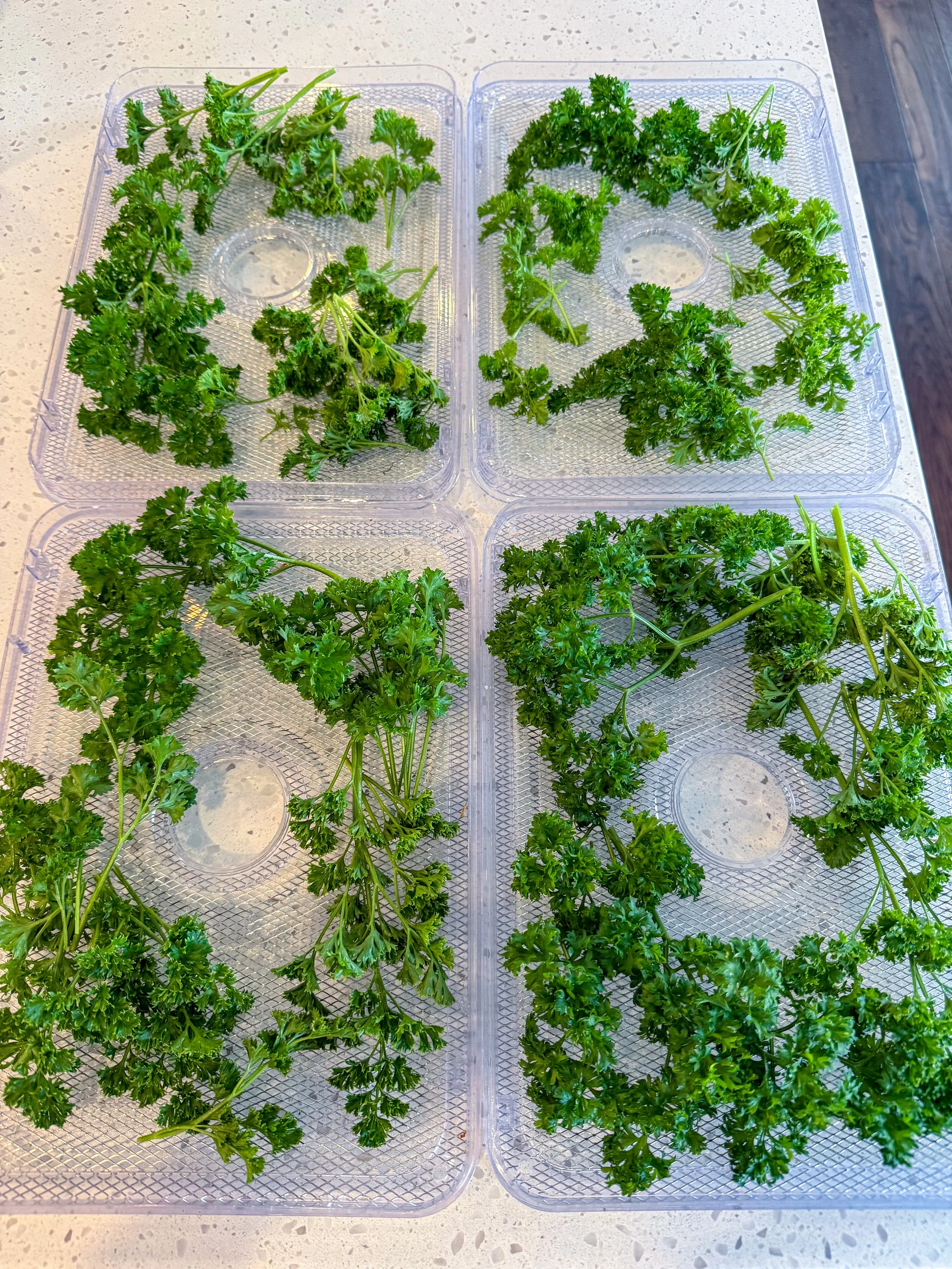
Dehydrating: Herbs Made Simple
For herbs, I use a simple food dehydrator, and the biggest thing that's made this manageable is picking one herb at a time instead of harvesting a little of everything and pulling out every jar at once. Monday might be oregano, Tuesday parsley, and so on — one variety, one dehydrator load, one jar to fill.
I run the dehydrator on its lowest setting for about 12 hours, then load everything into large mason jars. A mason jar vacuum sealer kit helps keep them fresh well into the off-season.
If you'd rather skip the dehydrator, tying herbs into bundles and hanging them upside down to air-dry works just as well — I just personally prefer the dehydrator for the simplicity and consistency.
Canning: Where I'm Still Learning
I'll be upfront: I'm not a seasoned canner. I use the Ball EasyCanner Electric Water Bath Canner because it takes a lot of the guesswork out for a beginner, and so far I've canned peaches and strawberry jam. I'll keep sharing what I learn as I get more comfortable with it.
Pickles: My go-to pickle recipe actually comes from my friend Ryan, and it's the one I reach for every time.
Ryan's Refrigerator Pickle Brine
2 cups vinegar
2 cups water
1 cup sugar
1½ teaspoons salt
Bring the vinegar, water, sugar, and salt to a boil until fully dissolved, then turn off the heat. Add dill and whatever pickling spices you like to the hot brine and let it sit for a couple of minutes to infuse. Pour the brine over your cucumbers, and drop one garlic clove into each jar before sealing. Let cool on the counter, then move to the fridge. Ready in a few hours!
I've also had great luck with a mason jar fermentation kit for fermenting pickles, which feels a little more forgiving than water-bath canning while I keep building confidence there.
If any of this feels like a lot to figure out on your own, that's what I'm here for — reach out and we'll figure out what makes sense for your harvest. Or shop the tools below to get started.
Featured Products
Elite Gourmet Food Dehydrator (Stainless Steel Trays, Adjustable Temp)
Ball Wide Mouth Glass Mason Jars with Lids and Bands, Quart Size 32 Ounce (Pack of 8)
Ball Wide Mouth Pint 16-Ounce Glass Mason Jar with Lids and Bands, 12-Count
Affiliate links - I earn a small commission at no extra cost to you. I only recommend products I personally use.